
RFP Software for Small Business in 2026
RFP software for small business: what 8 to 50 person teams actually need, what enterprise tools get wrong, and how to pick a right-sized platform.
What Small Teams Actually Need From RFP Software
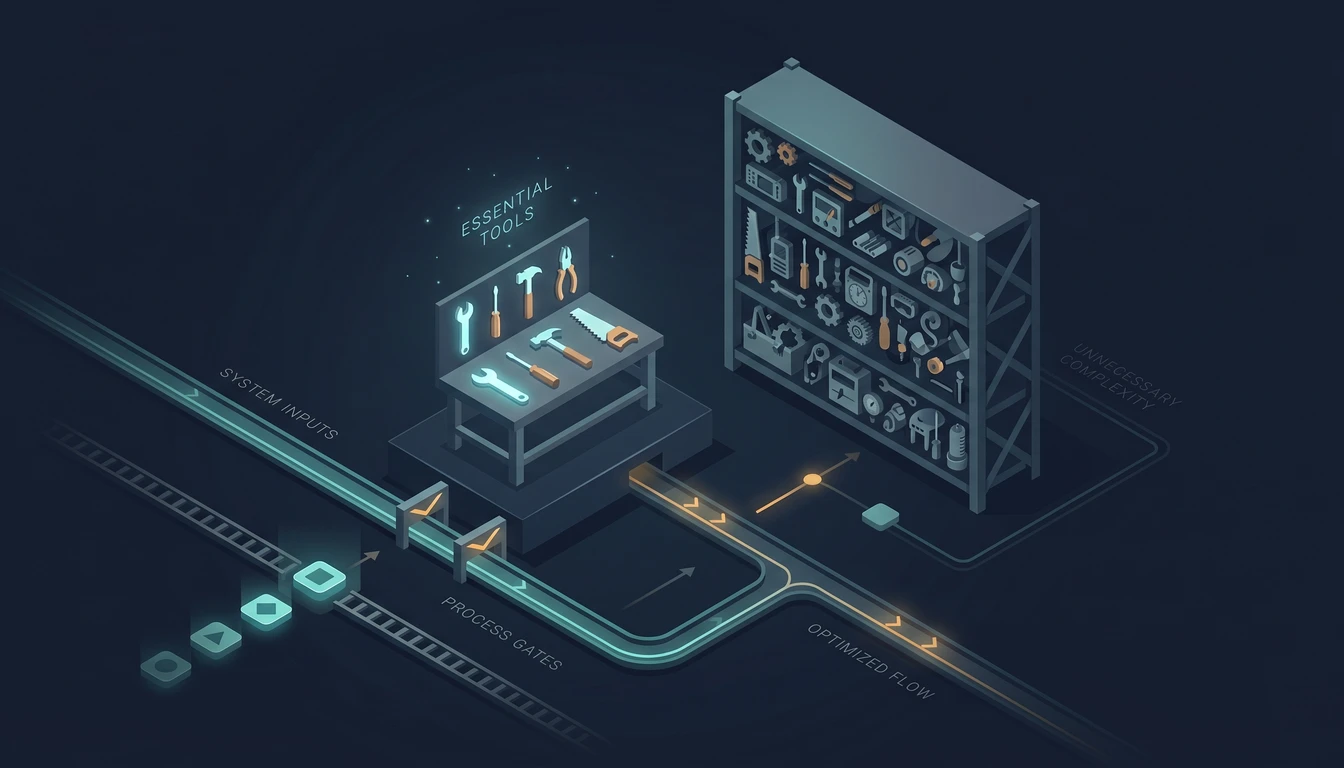
Small business RFP software is a different product category from enterprise RFP software. Not a lighter version. A different shape. A 15-person team needs requirement extraction, a compliance matrix, a searchable knowledge base, a non-hallucinating drafting tool, and clean Word and PDF export. That is the job. Everything beyond that is product built for somebody else's org chart.
Most small teams end up in the wrong category because the buying signals favor enterprise incumbents. Loopio and Responsive dominate G2 category pages and organic search. They also start at $20,000 per year and assume you have a proposal operations function to run them. For a 15-person GovCon or a 20-person cybersecurity firm, the tools are oversized and priced for a buyer that is not you.
Teams under 50 employees use roughly 30 to 40 percent of the feature surface of enterprise proposal platforms based on G2 and Capterra review patterns in 2025. The other 60 percent is paid for and ignored. The right question is not "which enterprise tool is cheapest." The right question is "what is the shape of a right-sized tool."
Where Enterprise Tools Hurt Small Teams
Enterprise RFP platforms hurt small teams in three specific ways. Naming them matters, because they show up on every demo call dressed as features.
Rollout Time You Do Not Have
Enterprise platforms assume a six to twelve week implementation window: stakeholder interviews, library migration, workflow configuration, role-based permissions, integration setup. For a small team, the proposal manager is the procurement lead is the Salesforce admin is the person shipping the next RFP. A three-month rollout is three months of not responding to RFPs with the tool you paid for.
Right-sized tools are productive on day one. Sign up, upload an RFP, get a compliance matrix. That is the standard.
Workflow Overhead You Do Not Need
Approval chains, multi-level reviews, role-based permissions, and compliance gates exist because Fortune 500 organizations need them for governance reasons. A 15-person team where the same person writes, reviews, and submits does not need a four-step approval workflow. Setting it up takes a week. Skipping it means paying for a feature you turned off.
A Content Library That Fights You
Loopio and Responsive's content libraries are built for thousands of answers curated by a content librarian. Small teams have a few dozen reusable blocks and no librarian. The heavier the library tooling, the more overhead before an answer is findable. A tool that makes content retrieval slow for small libraries is the wrong tool.
The 6-Part Checklist for Small Business RFP Software
Evaluate any platform against these six requirements. If a tool fails two or more, it is not right-sized for a small team.
- Same-day productivity. Upload an RFP, get an extracted requirement list and draft compliance matrix in under an hour, without an onboarding call.
- Transparent pricing. Published tiers. No demo-gated quote. No sales-qualifying-you process.
- A free tier or free trial that runs real documents. Not a sandbox with dummy data. Real extraction on a real RFP PDF.
- Strict anti-hallucination. When the knowledge base is thin, the tool inserts a placeholder, not a fabricated answer.
- Clean Word and PDF export. Zero manual reformatting for standard RFP submission formats.
- Grants and DDQs if you need them. Check your own pipeline. If grants or security questionnaires are on the horizon, a three-mode tool prevents the second-tool tax inside of 12 months.
Everything else is nice to have. Those six are the floor.
RFP Software for Small Business Compared
Here is what the shortlist actually looks like for teams in the 8 to 50 person range, with published pricing where available.
| Tool | Annual Cost | Free Tier | Self-Serve | Target Team Size | Grants | DDQs |
|---|---|---|---|---|---|---|
| Vercor | $3,588 to $5,988 | Yes | Yes | 8 to 50 | Yes | Yes |
| BreezeDocs | $588 to $3,588 | Yes | Yes | 1 to 20 | No | No |
| DeepRFP | $468/seat | No | Yes | 1 to 15 | No | No |
| AutoRFP | $10,788 to $15,588 | No | Partial | 15 to 50 | No | Limited |
| Loopio | $20,000+ (sales-gated) | No | No | 50+ | No | Yes |
| Responsive | $20,000+ (sales-gated) | No | No | 100+ | No | Yes |
BreezeDocs and DeepRFP are real options for 1 to 5 person teams with no federal or cybersecurity scope. AutoRFP is a solid RFP-only choice at mid-market but does not extend to grants. See our AutoRFP alternative breakdown and Loopio pricing explained for the full scope of each incumbent.
Pricing Reality for Small Teams
The sticker-price gap between right-sized and enterprise tools is $15,000 to $25,000 per year. That gap is not a feature gap. It is a "who the tool was built for" gap.
Think about what the $20,000 difference buys in a small business context. A contractor for one proposal cycle. A bonus for the person who carried the last RFP. A full year of a grants platform on top of the RFP tool. A trade show booth. A certification renewal. The opportunity cost of the enterprise subscription is usually larger than the marginal capability it adds.
Transparent pricing also matters for a different reason: approval. A VP signing a $3,588 annual subscription does not need to run it through procurement. A $25,000 line item does. The transparent-price tools remove a procurement cycle from the decision, which for small teams is a meaningful lever on speed.
When to Upgrade From Word and Google Docs
Most small teams start with Word, Google Docs, and a shared drive. That works up to a point. The signals that you have outgrown it are specific.
The 10-RFP-per-year threshold is a rough line. Under 10 annual RFPs, a well-organized shared drive and a template document usually beat the overhead of a new tool. Over 20, the content duplication, the "where did I answer this last time" tax, and the last-72-hours chaos overwhelm the savings.
Other signals:
- You have lost a bid because you missed a requirement embedded in Section L.
- Two people submitted different capability statements to the same agency.
- The last RFP took 80 hours of effort and the one before it took 80 different hours of effort.
- Security questionnaires are now a monthly occurrence and nobody owns a canonical set of answers.
- Grants are starting to appear in the pipeline.
Any two of those means the tool layer is your bottleneck, not your team. At that point the question is not whether to buy software. The question is which size.
What to Skip
Equally important: what not to buy at this stage.
Skip the Salesforce deep integration. Unless your RFP process is driven from CRM opportunity data, the integration is a quarter of setup for a report you could run in Excel.
Skip the approval workflows. A Slack message and a shared doc is faster than a three-step review chain until you are past 30 people.
Skip the "AI proposal assistant" chatbots that write open-ended prose with no traceability. Government buyers and enterprise procurement teams both audit answers. A tool that generates plausible-sounding text without citation is a compliance risk. See our guide on how to build a compliance matrix for what the alternative looks like.
Skip anything that requires a six-week rollout. You do not have the bandwidth, and the ROI window shrinks every week the tool is not producing drafts.
Tools That Help
For teams in the 8 to 50 person range, Vercor is built for the right-sized shape. $299 per month for Pro or $499 per month for Unlimited, transparent on the pricing page, self-serve signup with no sales call, and a free extraction tier that runs real RFPs without a credit card. It covers RFPs, grants, and security questionnaires in the same workspace, which eliminates the second-tool problem that hits small teams inside of 12 months when scope expands.
For the broader comparison, see the best RFP software for 2026 and one platform for RFPs, grants, and questionnaires.
The right call for a small team is not a cheaper Loopio. It is a tool sized for the team you actually have, at a price that clears without a procurement cycle, that does the five things the job requires and stops.